
While it made sense for Capt Amarinder Singh to support the Gandhis since none of the 23 'rebels' had any mass base, the truce was important for his ambition to lead the party in the February 2022 state elections. Archis Mohan reports.
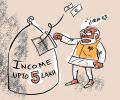
Among large states, the lowest rate of filing was seen in Bihar at 5 per cent, followed by UP at 8.11 per cent - much below the national average of 12 per cent.

Court orders probe into Union minister Gajendra Singh Shekhawat's role in a complaint linked to Sanjivani Credit Cooperative Society, in which thousands of investors allegedly lost Rs 900 crore a year ago.

The government said that far from targeting any US entity, the purpose was to ensure fairness, healthy competition, and to exercise the ability of governments to tax businesses having a nexus with the Indian market through digital operations.

E-commerce companies that fall within the scope of the equalisation levy include Adobe, Uber, Udemy, Zoom.us, Expedia, Alibaba, Ikea, LinkedIn, Spotify, and eBay.

The plan involves the Rajya Sabha and Lok Sabha seating half of their members in their respective chambers, reports Archis Mohan.

Apart from them, consignments of 11 top importers, including LG, Samsung, Toyota, Honda, and Siemens, will also be allowed entry, relieving them of the 100 per cent inspection rule.

Tax department feels that the second quarter would be much better than the first quarter of the year as the economy has started improving.

According to government sources, frozen parota (layered flatbread) does not qualify as a staple item and is not eaten by the poor. It is consumed by a class that can afford to pay taxes, hence falls in the 18 per cent category with the likes of biscuits, pastries, and cakes.

The firm, headed by Sunil Kumar Gupta, was appointed auditors of the PM's National Relief Fund in 2019, reports Archis Mohan
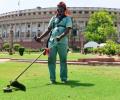
Officials have said the national capital lacked a convention centre big enough to seat so many MPs and adhere to social distancing norms. Additionally, holding a 'virtual session' looks slims as any change in the rules requires a motion to be carried in both the Houses of Parliament.
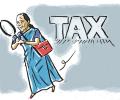
While the ratio determines the extent to which the government is able to finance its expenditure, it is also an indicator of tax compliance. Developed countries have a higher contribution of tax to their GDP.

The revision of the consumer price index and GDP base years from 2011-12 and 2012, respectively, were dependent on the outcomes of the consumer expenditure survey of 2017-18 that the government decided to junk recently.
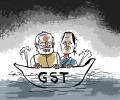
The Centre managed to collect only Rs 990 crore as compensation cess in April 2020-21, almost one-ninth of the figure of Rs 8,874 crore mopped up a year ago. The subdued collection would further increase states' problems unless the GST Council, which meets next week, decides to borrow from the market.

The US Trade Representative's (USTR) office will also conduct the Section 301 probe against nine others, including Austria, Brazil, Indonesia, Italy, Spain, Turkey, the Czech Republic, the UK, and the EU, for levying or considering digital services taxes "discriminating against US companies".
Those spending over Rs 2 lakh on foreign travel, incurring more than Rs 1 lakh electricity bills, or depositing over Rs 1 crore in current account will have to mandatorily file ITR even if their total income is below the taxable limit. The last date for filing has been extended to Nov 30 from Jul 31.

The simplified form will comprise details of taxpayers' mutual fund transactions, pending and completed income tax proceedings, status of income tax demand, besides tax deducted at source and tax collected at source. Form 26AS is an annual tax credit statement containing details of various taxes deducted on income.
'The spirit of cooperation between the Centre and states has been diluted in many ways.' 'The level of consultation which used to be there earlier has reduced significantly.'
The government was going in the "wrong direction" and it was "highly condemnable" that it did not discuss the proposed changes with trade unions and other stakeholders, says BMS, trade union arm of the RSS.
Experts pointed out the move will only help taxpayers temporarily, as the tax liability remained the same and the date for advance tax has not been extended.
